

August 7, 2025

Understanding Harmful Algal Blooms

While harmful algal blooms (HABs) can threaten health and habitats, informed action can make a difference— and we’re here to guide the way

Before diving into the specifics, it’s important to remember that understanding harmful algal blooms is about empowering action through information, not provoking alarm. This article will equip you with clear, evidence-based insights into what HABs are, why they occur, and how simple, practical steps can help protect both you and our waterways.

Preventing Harmful Algal Blooms: Strategies for a Healthier Environment

To curb harmful algal blooms (HABs), a comprehensive strategy is needed, focusing on key contributing factors: excessive nutrients, hydrological changes, and ecosystem disruptions. Effective measures include nutrient management, responsible land-use strategies, and enhanced monitoring practices. By tackling these underlying causes, we can significantly reduce both the frequency and intensity of HABs.
Understanding Harmful Algal Blooms
The Threat Beneath the Surface: Unveiling Harmful Algal Blooms

Algal blooms, while a natural part of aquatic ecosystems, can become problematic when excess nutrients fuel unchecked growth, particularly in species like cyanobacteria (blue-green algae). The consequences can be severe:

  • Toxicity: Some cyanobacteria release harmful toxins that endanger humans, animals, and aquatic life.
  • Oxygen Depletion: As blooms decay, they consume large amounts of oxygen, creating lifeless “dead zones.” (also known as Eutrophication)
  • Water Quality Decline: Excessive blooms can render water unfit for drinking, recreation, and other uses.
  • Economic Consequences: Harmful algal blooms (HABs) can disrupt fisheries, tourism, and property values.
Alert and Aware: Protecting Yourself from Harmful Algal Blooms

Harmful algal blooms (HABs) can pose serious health risks, making it crucial to stay out of affected waters—and to keep pets and livestock away as well. Since it’s impossible to determine a bloom’s toxicity just by looking at it, the safest approach is to avoid contact altogether.

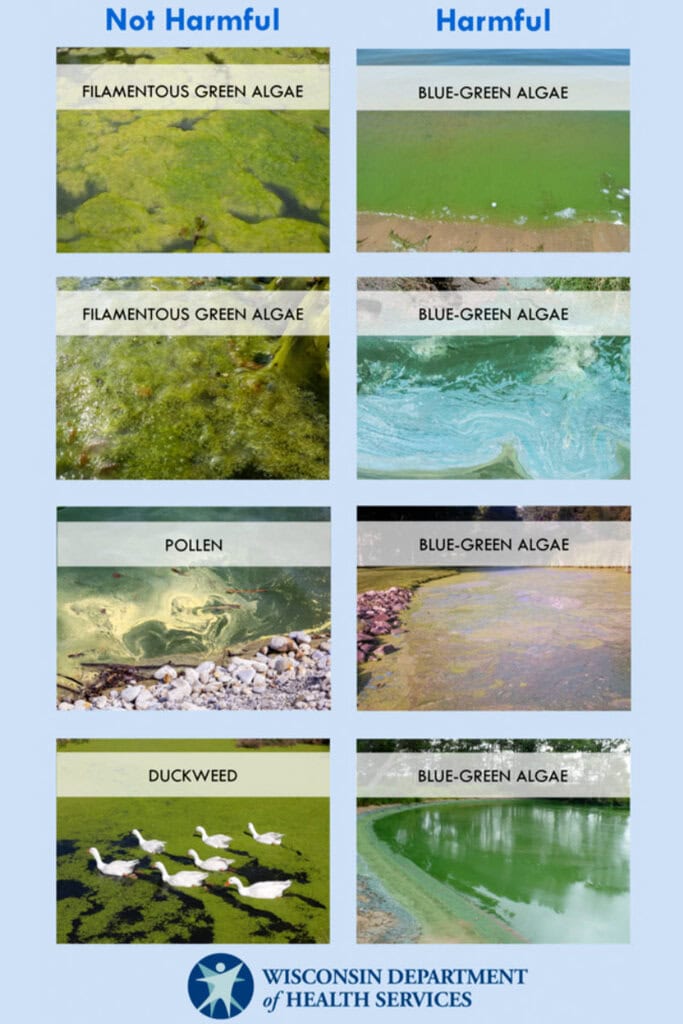
Harmful algal blooms (HABs) come in a surprising variety of shades, colors, and appearances, making them difficult to identify at a glance. Depending on the type of algae or cyanobacteria involved, blooms can take on hues of green, blue-green, red, brown, yellow, or even purple.

What They Look Like:

  • Bright green, pea-soup-like water: A common sign of cyanobacteria, forming thick layers on the surface.
  • Rusty red or brown patches: These may indicate dinoflagellates, known for causing “red tides.”
  • Foamy, scummy, or oily sheens: Some blooms create a slick or paint-like layer that coats the water.
  • Floating mats or clumps: Blooms can appear as tangled masses drifting across the surface.
  • Discolored water without visible scum: Some HABs cause subtle shifts in water clarity and tone.

Since harmful algae can take on many forms, it’s crucial not to rely on appearance alone—when in doubt, avoid contact and report suspected blooms to environmental authorities and our expert Lake Management Specialists here at McCloud Aquatics!

Understanding Harmful Algal Blooms

Health Risks for Humans and Animals

  • Skin irritation, rashes, and eye inflammation can result from direct exposure
  • Ingesting contaminated water may cause nausea, vomiting, and liver damage
  • Breathing in airborne toxins from the bloom can lead to respiratory issues.
  • Pets and livestock are especially vulnerable, as they may drink or swim in tainted water, leading to severe illness or even fatal poisoning.
  • When in doubt, steer clear and report suspicious blooms to local environmental authorities. Prevention starts with awareness!
Winning the Battle Against Harmful Algal Blooms: A Multi-Faceted Approach

Harmful algal blooms (HABs) threaten ecosystems, water quality, and public health, making it critical to implement a comprehensive strategy to prevent and control their spread. The fight against HABs requires action across multiple fronts, targeting the root causes and enhancing environmental resilience.

🌱 Cutting Off the Fuel: Nutrient Reduction

Excess nitrogen and phosphorus act as fertilizer for HABs, accelerating their growth. To starve the blooms, pollution sources must be tackled:

  • Agricultural Practices: Adopt eco-friendly practices like using phosphorus-free fertilizers, planting cover crops, and maintaining buffer strips to prevent runoff.
  • Wastewater Treatment: Upgrading treatment plants to remove more nutrients can significantly reduce contamination.
  • Stormwater Management: Green infrastructure solutions like rain gardens and permeable pavements help filter pollutants before they reach waterways.
  • Septic System Maintenance: Properly functioning septic systems prevent nutrient leaching into water supplies.

🌊 Managing Lakes and Ponds: Direct Interventions

Several techniques can help control algae growth:

  • Aeration: Running aeration systems continuously improves water quality and reduces blooms, especially at night.
  • Phosphorus Binding: Special treatments (such as McCloud Aquatics Nutrient Management Program) prevent excess nutrients from fueling algae growth.
  • Physical Removal: Raking, dredging (removing muck from the bottom), or harvesting algae helps reduce biomass in the water.
  • Introducing Beneficial Bacteria: These bacteria compete with algae for nutrients, decompose organic matter that fuels algal growth, and even produce natural compounds that inhibit harmful algae.
  • Biological Control: Planting aquatic vegetation or introducing species that feed on algae provides natural competition.
  • Perform Water Quality testing: Testing can identify cyanobacteria and cyanotoxins in water before they become a widespread issue, allowing for timely intervention
  • Algaecides: When applied by licensed professionals, chemical treatments can be highly effective in controlling algae growth while minimizing ecological risks.

Prevention requires vigilance. By taking proactive steps—reducing nutrient pollution, improving lake management, and advancing research—we can protect our water sources and minimize the damaging effects of HABs.

Great news—McCloud Aquatics offers all of these solutions and beyond! Explore our full range of services to see how we expertly blend science and innovation to create healthier, well-balanced ponds.

16 Expert Services in Water Management | McCloud Aquatics

August 7, 2025

Understanding Harmful Algal Blooms

While harmful algal blooms (HABs) can threaten health and habitats, informed action can make a difference— and we’re here to guide the way

Before diving into the specifics, it’s important to remember that understanding harmful algal blooms is about empowering action through information, not provoking alarm. This article will equip you with clear, evidence-based insights into what HABs are, why they occur, and how simple, practical steps can help protect both you and our waterways.

Preventing Harmful Algal Blooms: Strategies for a Healthier Environment

To curb harmful algal blooms (HABs), a comprehensive strategy is needed, focusing on key contributing factors: excessive nutrients, hydrological changes, and ecosystem disruptions. Effective measures include nutrient management, responsible land-use strategies, and enhanced monitoring practices. By tackling these underlying causes, we can significantly reduce both the frequency and intensity of HABs.

Understanding Harmful Algal Blooms
The Threat Beneath the Surface: Unveiling Harmful Algal Blooms

Algal blooms, while a natural part of aquatic ecosystems, can become problematic when excess nutrients fuel unchecked growth, particularly in species like cyanobacteria (blue-green algae). The consequences can be severe:

  • Toxicity: Some cyanobacteria release harmful toxins that endanger humans, animals, and aquatic life.
  • Oxygen Depletion: As blooms decay, they consume large amounts of oxygen, creating lifeless “dead zones.” (also known as Eutrophication)
  • Water Quality Decline: Excessive blooms can render water unfit for drinking, recreation, and other uses.
  • Economic Consequences: Harmful algal blooms (HABs) can disrupt fisheries, tourism, and property values.
Alert and Aware: Protecting Yourself from Harmful Algal Blooms

Harmful algal blooms (HABs) can pose serious health risks, making it crucial to stay out of affected waters—and to keep pets and livestock away as well. Since it’s impossible to determine a bloom’s toxicity just by looking at it, the safest approach is to avoid contact altogether.

Harmful algal blooms (HABs) come in a surprising variety of shades, colors, and appearances, making them difficult to identify at a glance. Depending on the type of algae or cyanobacteria involved, blooms can take on hues of green, blue-green, red, brown, yellow, or even purple.

What They Look Like:

  • Bright green, pea-soup-like water: A common sign of cyanobacteria, forming thick layers on the surface.
  • Rusty red or brown patches: These may indicate dinoflagellates, known for causing “red tides.”
  • Foamy, scummy, or oily sheens: Some blooms create a slick or paint-like layer that coats the water.
  • Floating mats or clumps: Blooms can appear as tangled masses drifting across the surface.
  • Discolored water without visible scum: Some HABs cause subtle shifts in water clarity and tone.

Since harmful algae can take on many forms, it’s crucial not to rely on appearance alone—when in doubt, avoid contact and report suspected blooms to environmental authorities and our expert Lake Management Specialists here at McCloud Aquatics!

Understanding Harmful Algal Blooms

Health Risks for Humans and Animals

  • Skin irritation, rashes, and eye inflammation can result from direct exposure
  • Ingesting contaminated water may cause nausea, vomiting, and liver damage
  • Breathing in airborne toxins from the bloom can lead to respiratory issues.
  • Pets and livestock are especially vulnerable, as they may drink or swim in tainted water, leading to severe illness or even fatal poisoning.
  • When in doubt, steer clear and report suspicious blooms to local environmental authorities. Prevention starts with awareness!
Winning the Battle Against Harmful Algal Blooms: A Multi-Faceted Approach

Harmful algal blooms (HABs) threaten ecosystems, water quality, and public health, making it critical to implement a comprehensive strategy to prevent and control their spread. The fight against HABs requires action across multiple fronts, targeting the root causes and enhancing environmental resilience.

🌱 Cutting Off the Fuel: Nutrient Reduction

Excess nitrogen and phosphorus act as fertilizer for HABs, accelerating their growth. To starve the blooms, pollution sources must be tackled:

  • Agricultural Practices: Adopt eco-friendly practices like using phosphorus-free fertilizers, planting cover crops, and maintaining buffer strips to prevent runoff.
  • Wastewater Treatment: Upgrading treatment plants to remove more nutrients can significantly reduce contamination.
  • Stormwater Management: Green infrastructure solutions like rain gardens and permeable pavements help filter pollutants before they reach waterways.
  • Septic System Maintenance: Properly functioning septic systems prevent nutrient leaching into water supplies.

🌊 Managing Lakes and Ponds: Direct Interventions

Several techniques can help control algae growth:

  • Aeration: Running aeration systems continuously improves water quality and reduces blooms, especially at night.
  • Phosphorus Binding: Special treatments (such as McCloud Aquatics Nutrient Management Program) prevent excess nutrients from fueling algae growth.
  • Physical Removal: Raking, dredging (removing muck from the bottom), or harvesting algae helps reduce biomass in the water.
  • Introducing Beneficial Bacteria: These bacteria compete with algae for nutrients, decompose organic matter that fuels algal growth, and even produce natural compounds that inhibit harmful algae.
  • Biological Control: Planting aquatic vegetation or introducing species that feed on algae provides natural competition.
  • Perform Water Quality testing: Testing can identify cyanobacteria and cyanotoxins in water before they become a widespread issue, allowing for timely intervention
  • Algaecides: When applied by licensed professionals, chemical treatments can be highly effective in controlling algae growth while minimizing ecological risks.

Prevention requires vigilance. By taking proactive steps—reducing nutrient pollution, improving lake management, and advancing research—we can protect our water sources and minimize the damaging effects of HABs.

Great news—McCloud Aquatics offers all of these solutions and beyond! Explore our full range of services to see how we expertly blend science and innovation to create healthier, well-balanced ponds.

16 Expert Services in Water Management | McCloud Aquatics