
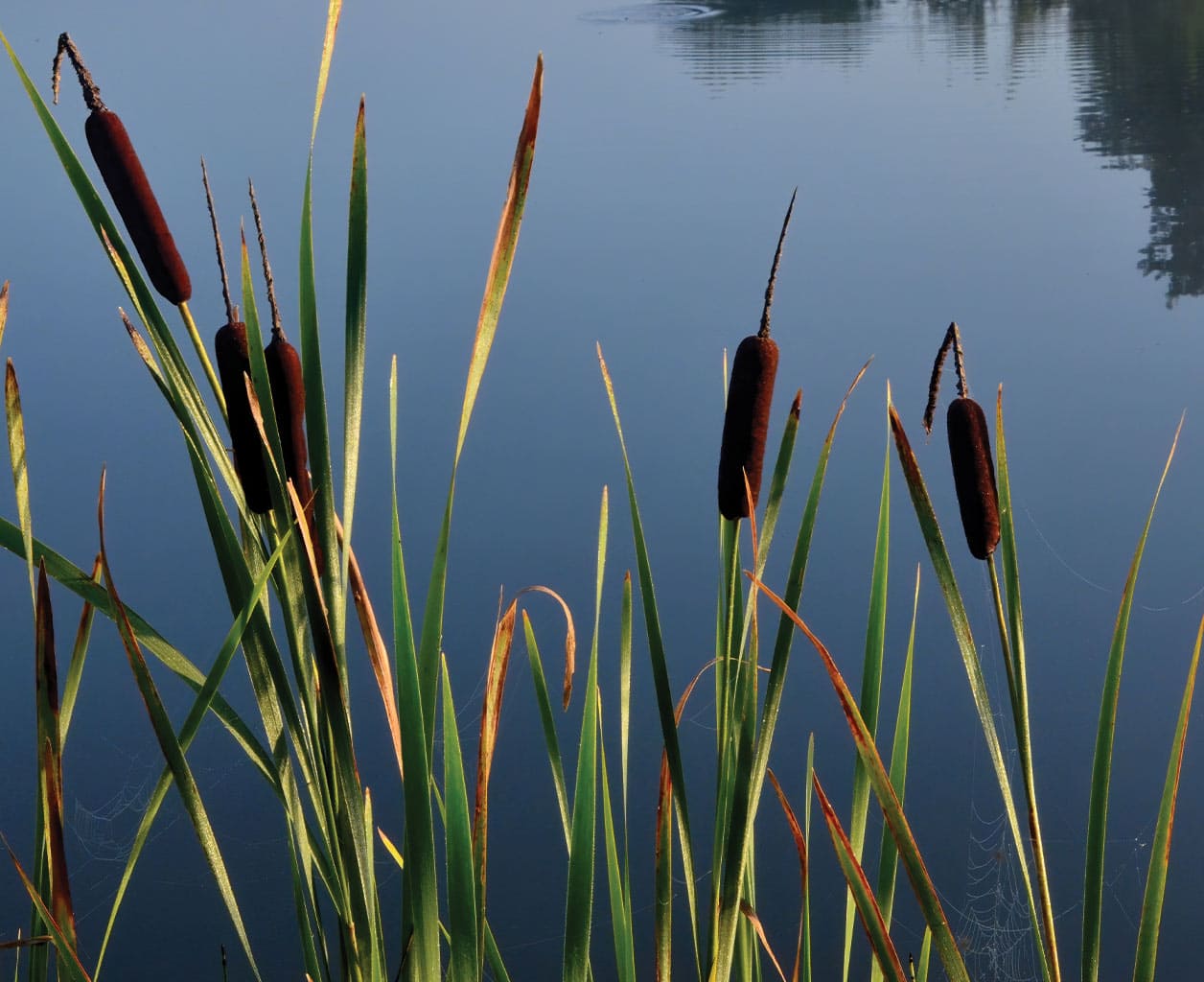
Walk along the shoreline of almost any pond or wetland, and you’re likely to find cattails swaying in the breeze. These plants are a familiar sight across the Midwest, and while cattails can have their place, they don’t always belong everywhere.
When left unmanaged, dense cattail stands can quickly overtake shorelines, crowd out native vegetation, reduce biodiversity, and limit access to your pond.
At McCloud Aquatics, we help property owners manage invasive vegetation while restoring healthier, more resilient shorelines through customized vegetation management and native planting programs.
The Benefits of Cattails
Cattails often get a bad reputation, but they’re not inherently “bad.”
In moderation, they provide several important ecological benefits. Their dense root systems help stabilize shorelines and reduce erosion, while their stems slow water movement and capture sediment before it enters open water. Cattails also provide food, nesting areas, and shelter for birds, amphibians, insects, and other wildlife.
Like many aquatic plants, cattails play an important role—until they begin to dominate the landscape.
When Cattails Become a Problem
Cattails spread aggressively through underground rhizomes and seeds. Over time, a small patch can expand into dense monocultures that replace diverse native plant communities.
When cattails take over, they can:
- Restrict access for fishing, boating, and recreation
- Reduce open-water habitat for fish and wildlife
- Crowd out beneficial native plants
- Trap sediment and accelerate shoreline infill
- Reduce habitat diversity for pollinators and birds
- Create an overgrown appearance that changes the character of the shoreline
A shoreline dominated by one species is typically less resilient than one with a diverse mix of native vegetation.
Why Plant Diversity Matters
One of the best ways to manage cattail populations is by replacing portions of dense stands with a variety of native shoreline plants.
A diverse planting palette creates healthier ecosystems by:
- Increasing habitat diversity for wildlife
- Supporting pollinators throughout the growing season
- Improving shoreline resilience
- Extending seasonal color and visual interest
- Reducing the dominance of any single species
Rather than relying on one plant to do every job, a diverse shoreline allows different species to contribute unique ecological benefits.
Native Plants That Can Replace Dense Cattail Stands
Many native emergent plants provide the same ecological benefits as cattails while increasing biodiversity and creating a more visually appealing shoreline.
American Sweetflag (Acorus americanus)
An attractive emergent plant that performs well in shallow water and saturated soils while adding texture along the shoreline.
Swamp Milkweed (Asclepias incarnata)
A favorite of monarch butterflies and other pollinators, swamp milkweed brings vibrant color to wet areas while supporting wildlife.
Blue Flag Iris (Iris virginica)
Known for its striking purple blooms, this native iris thrives along pond edges and adds seasonal beauty.
Cardinal Flower (Lobelia cardinalis)
Its brilliant red flowers attract hummingbirds and create eye-catching shoreline displays during summer.
Pickerelweed (Pontederia cordata)
A classic emergent aquatic plant that provides excellent wildlife habitat while producing beautiful purple flower spikes.
Soft Rush and Native Sedges
Species such as soft rush (Juncus effusus), lake sedge (Carex lacustris), and buxbaum’s sedge (Carex buxbaumii) help stabilize shorelines, reduce erosion, and improve habitat diversity.
Other excellent native options include:
- White Turtlehead
- Spotted Joe-Pye Weed
- Arrow Arum
- Broadleaf Arrowhead
- Riddell’s Goldenrod
- Winged Loosestrife
- Allegheny Monkeyflower
- River Bulrush
- Hardstem Bulrush
- Giant Bur-reed
- Orange Coneflower
- Awl-fruited Sedge
All of which are selected for their ability to thrive in wet soils while contributing unique habitat, structure, or seasonal interest. Each plant is highlighted in McCloud Aquatics’ native planting guide as excellent alternatives for diversifying wetland edges and replacing dense cattail populations.
Managing Cattails the Right Way
Completely removing cattails isn’t always the best solution. Instead, successful shoreline management focuses on restoring balance. Depending on your shoreline and management goals, McCloud Aquatics may recommend:
- Targeted cattail and invasive vegetation treatments
- Mechanical removal where appropriate
- Native planting and re-vegetation
- Shoreline restoration and erosion stabilization
- Long-term monitoring and stewardship
Every shoreline is different, which is why management plans should be customized to the specific site and desired outcomes. McCloud Aquatics uses an integrated approach to vegetation management that balances ecological health with the practical needs of each property.
Restore Balance to Your Shoreline with McCloud Aquatics
If cattails or other invasive vegetation are beginning to take over your shoreline, McCloud Aquatics can help.
Our team provides customized vegetation management, shoreline restoration, and native planting solutions designed to restore ecological balance while enhancing the beauty and function of your waterbody.
Whether you’re looking to improve wildlife habitat, reduce invasive pressure, or create a more resilient shoreline, we’ll develop a plan tailored to your property and long-term goals.
Ready to restore your shoreline?