

When winter arrives, your lake or pond may look serene on the surface. Aquatic plants have slowed their growth, fish are less active, and a layer of ice may eventually cover the water.
But beneath the surface, there’s still a lot happening…
Fish continue to need oxygen, organic material continues to break down, and changing temperatures influence the conditions within your waterbody.
While winter may seem like an off-season for lake and pond management, the colder months play an important role in the overall health of your aquatic ecosystem.
So, what exactly happens to your lake or pond when temperatures drop? Here are four important changes that take place during winter and what they mean for your waterbody’s health.
1. Water Temperatures Drop and Ice Changes Pond Conditions
As air temperatures decrease, the surface of your pond begins to cool. Water reaches its greatest density at approximately 39°F (4°C). As surface water cools toward this temperature, it becomes denser and can sink, contributing to seasonal mixing in many ponds.
In deeper ponds, relatively warmer water can remain near the bottom beneath the ice. This temperature layering can provide an important environment for fish and other aquatic life throughout winter.
However, conditions vary depending on your pond’s depth, size, and exposure to winter weather. Shallow ponds may experience greater temperature fluctuations and can be especially vulnerable during extended periods of ice and snow cover.
2. Fish Slow Down, but They Still Need Oxygen
Fish don’t disappear when your pond freezes—their activity simply shifts to adapt to colder temperatures.
Most common pond fish are cold-blooded, meaning their body temperature is influenced by the surrounding water. As temperatures drop, their metabolism slows.
Fish generally become less active, require less food, and consume less oxygen than they do during warmer months. However, they still need dissolved oxygen to survive.
Understanding Winter Fish Kills
In some waterbodies, prolonged periods of low dissolved oxygen can result in a winter fish kill.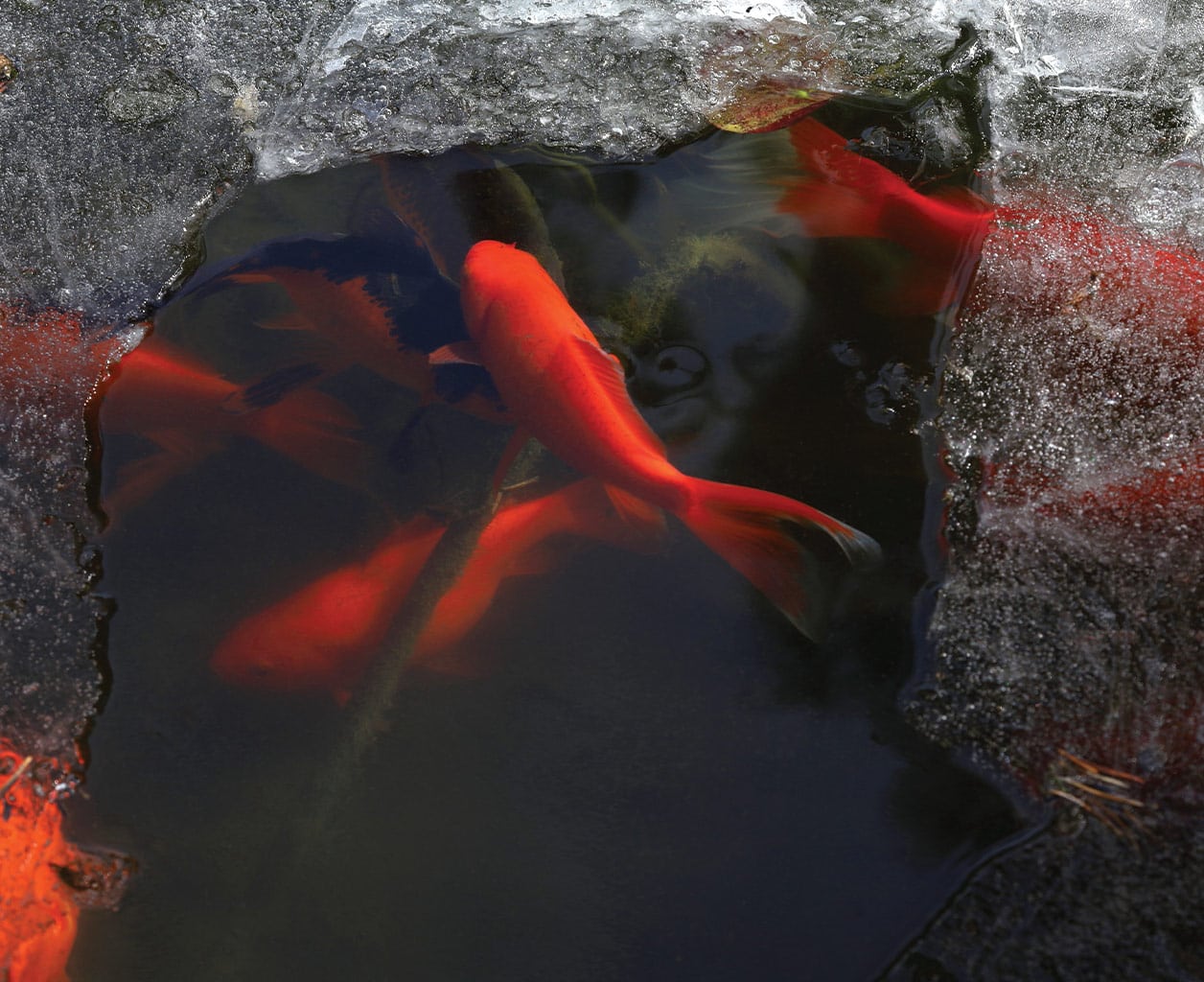
Several factors can increase this risk, including:
- Extended ice and snow cover
- Shallow water depths
- Excessive organic material and decomposing vegetation
- High biological oxygen demand
- Limited oxygen replenishment
Not every frozen pond will experience a winter fish kill, but these conditions demonstrate why maintaining healthy water quality throughout the year is so important.
3. Algae Growth Slows, but Nutrients Don’t Disappear
One common misconception is that cold weather completely eliminates algae problems. While cooler temperatures and reduced sunlight can slow the growth of many algae species, it doesn’t necessarily disappear during winter.
Some species can remain active in cold water, while others persist in forms that allow them to grow again when conditions become favorable. More importantly, the nutrients that contribute to algae growth don’t simply vanish when temperatures drop.
Phosphorus and nitrogen often remain in the water or within bottom sediments throughout winter. As temperatures rise and growing conditions improve in spring, those nutrients support new algae growth.
McCloud Aquatics offers customized nutrient management and algae control solutions designed to address water quality concerns and help manage the factors contributing to excessive growth.
4. Aeration and Seasonal Maintenance Become Especially Important
As temperatures drop, your pond’s needs begin to change, and your aeration system may need to adjust accordingly. Aeration plays an important role in maintaining a healthy waterbody by improving circulation and increasing dissolved oxygen levels.
During winter, a properly designed and managed aeration system can help support oxygen levels and reduce the risk of oxygen depletion. However, not every aeration system should operate the same way during colder months.
Which Aeration System is Right For Your Waterbody?
The best aeration system depends on several factors, including your pond’s size, depth, fish population, existing equipment, and overall management goals.
For example, in deeper ponds, operating an aeration system in the wrong location can disrupt the natural temperature layering that allows fish to remain in relatively warmer water near the bottom. Depending on the waterbody and equipment, some systems may benefit from seasonal adjustments, while others may require winterization or temporary shutdown.
Expert Pond Care Through Every Season
At McCloud Aquatics, our expert team understands that effective lake and pond management doesn’t stop when temperatures drop. While every lake and pond has different needs, there are proactive steps you can take to ensure your waterbody is ready to thaw out in the spring.
Ready to give your lake or pond the care it deserves? Contact McCloud Aquatics today!